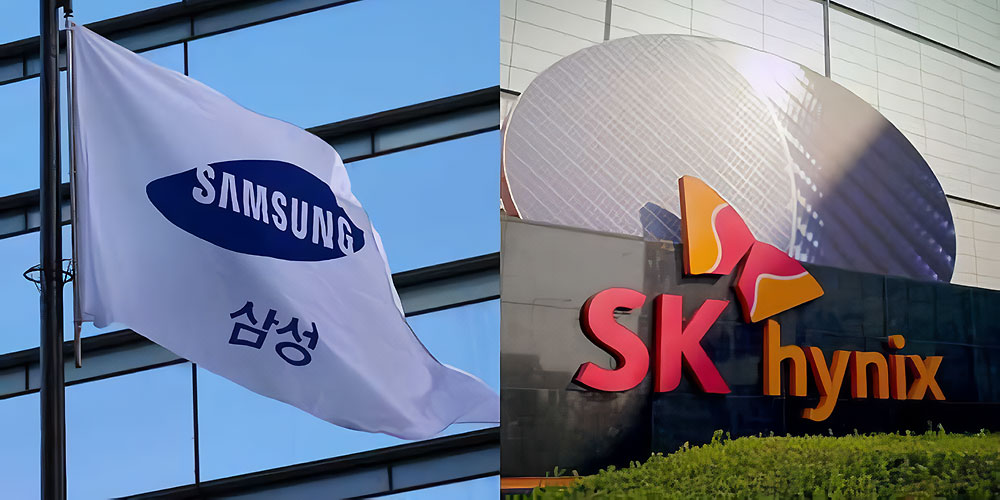
The race for supremacy in the high-bandwidth memory (HBM) market has officially entered its most critical phase, with two South Korean tech titans locked in a high-stakes battle that will define the artificial intelligence hardware landscape for years to come. As the demand for AI accelerators from companies like NVIDIA and AMD skyrockets, the ability to produce next-generation HBM4 chips with high yields has become the single most important metric separating winners from spectators. This comprehensive analysis delves deep into the strategic maneuvers, technological breakthroughs, and yield achievements of Samsung Electronics and SK Hynix, examining how their divergent paths in HBM4 production are reshaping the global semiconductor order.
The Strategic Importance of HBM4 in the AI Ecosystem
High-Bandwidth Memory has evolved from being merely a supporting component to becoming the bottleneck and therefore the crown jewel of modern AI computing . Contemporary large language models such as GPT-4 and Gemini require massive parallel processing capabilities that traditional GPU memory architectures simply cannot sustain. HBM, with its unique 3D stacking architecture utilizing Through-Silicon Vias (TSV), provides the ultra-wide communication channels necessary to feed data-hungry AI accelerators operating at the limits of computational physics.
The transition to HBM4 represents a paradigm shift rather than a simple generational upgrade. With data I/O counts doubling from 1,024 to 2,048 pins and interface widths expanding dramatically, HBM4 presents unprecedented engineering challenges that separate world-class semiconductor manufacturers from also-rans . In this environment, yield rates the percentage of defect-free chips emerging from complex manufacturing processes have emerged as the ultimate competitive weapon. Higher yields mean lower costs per gigabyte, greater supply security for hyperscale customers, and significantly higher profitability for memory manufacturers.
Samsung’s Aggressive Gambit: 1c DRAM and First-Mover Advantage
Breaking Tradition with Advanced Node Adoption
In a stunning departure from conventional semiconductor wisdom, Samsung Electronics made the calculated decision to equip its HBM4 products with the company’s most advanced DRAM technology: the sixth-generation 10-nanometer-class 1c process . Historically, memory manufacturers have preferred to introduce new packaging technologies alongside proven, mature DRAM nodes to minimize risk and maximize initial yields. Samsung’s decision to leap directly to the bleeding edge represents either visionary boldness or reckless ambition and early evidence suggests it is paying spectacular dividends.
According to official announcements made in February 2026, Samsung has successfully commenced mass production and shipment of commercial HBM4 products to major customers, including NVIDIA, marking the industry’s first such achievement . This timeline represents a significant acceleration from earlier projections, with shipments beginning approximately one week ahead of schedule following intensive customer discussions. The company’s Executive Vice President and Head of Memory Development, Hwang Sang-joon, characterized the achievement as a deliberate strategic choice: rather than pursuing the conventional path of leveraging proven designs, Samsung embraced the challenge of integrating the most advanced nodes available .
Yield Milestones: Crossing the Profitability Threshold
The foundation of Samsung’s HBM4 offensive rests upon remarkable progress in 1c DRAM manufacturing yields. Industry sources and Korean media reports indicate that Samsung’s 1c DRAM process has achieved yields of approximately 60 percent, successfully crossing the critical breakeven point for mass production profitability . This achievement is particularly significant because it represents a strategic reversal from Samsung’s recent tendency to prioritize yield perfection over speed to market. By returning to its traditional aggressive posture of rapid production ramp-up, Samsung has positioned itself to capture valuable early design wins with dominant AI accelerator designers.
The company reported that initial production yields for HBM4 were sufficiently strong that no design modifications or re-engineering cycles were required . This is an extraordinary claim in the semiconductor industry, where first-pass silicon success is rare even with mature technologies, let alone with leading-edge nodes deployed in novel packaging configurations. Samsung’s tightly integrated Design Technology Co-Optimization (DTCO) approach, combining expertise from its foundry and memory divisions, appears to have delivered substantial competitive advantages in both quality and yield management .
Performance Superiority Through Process Leadership
Samsung’s yield achievements translate directly into tangible performance advantages. The company’s HBM4 delivers sustained processing speeds of 11.7 gigabits per second, representing a 46 percent improvement over the JEDEC industry baseline of 8 Gbps and a 22 percent increase over HBM3E’s maximum pin speed of 9.6 Gbps . Even more impressively, the architecture contains substantial headroom for further enhancement, with potential boost capabilities reaching 13 Gbps to accommodate increasingly demanding AI workloads.
Total memory bandwidth per stack has nearly tripled compared to HBM3E, reaching an extraordinary maximum of 3.3 terabytes per second . This performance envelope enables Samsung’s customers to maximize GPU throughput and achieve more favorable total cost of ownership for large-scale AI datacenter deployments. Equally important are the power efficiency improvements: through the implementation of low-voltage TSV technology and optimized power distribution networks, Samsung has achieved a 40 percent enhancement in power efficiency while simultaneously improving thermal resistance by 10 percent and heat dissipation capabilities by 30 percent .
SK Hynix: The Defending Champion’s Counter-Strategy
Maintaining Yield Parity Across Generations
While Samsung claims the spotlight with its early production announcements, SK Hynix enters the HBM4 battle from a position of considerable strength. The company established its HBM4 mass production system in September 2025 and has been shipping products according to customer-agreed timelines . More importantly, SK Hynix has publicly committed to maintaining HBM4 yields at levels comparable to its exceptionally successful HBM3E production .
This yield parity commitment is strategically significant. SK Hynix dominated the HBM3E market with what analysts describe as “overwhelming” market share, capturing approximately 62 percent of the total HBM market during recent quarters . The company’s yield management expertise, particularly in advanced packaging technologies, represents a formidable competitive moat that Samsung must cross. By declaring its intention to replicate HBM3E yield performance in the HBM4 generation, SK Hynix signals confidence that its technological advantages are transferable across product generations.
MR-MUF: The Proprietary Packaging Advantage
Central to SK Hynix’s defensive strategy is its proprietary MR-MUF (Mass Reflow Molded Underfill) technology . This advanced packaging approach differs fundamentally from Samsung’s TC-NCF (Thermal Compression Non-Conductive Film) methodology. MR-MUF enables SK Hynix to achieve 16-layer HBM4 stacks with die thickness reduced to approximately 30 micrometers, all while maintaining structural integrity and thermal performance within the stringent JEDEC thickness specification of 775 micrometers .
The 16-layer HBM4 products demonstrated by SK Hynix offer capacities reaching 48 gigabytes when utilizing 24Gb DRAM dies, providing AI accelerator designers with substantially increased memory capacity within identical physical footprints . This capacity advantage is particularly attractive for large language model inference workloads where parameter counts continue to scale exponentially.
SK Hynix has further strengthened its competitive position through strategic partnership with Taiwan Semiconductor Manufacturing Company (TSMC), integrating 12-nanometer logic dies manufactured by TSMC as the foundation “brain” layer for its HBM4 stacks . This collaboration leverages TSMC’s world-leading logic manufacturing capabilities while allowing SK Hynix to focus on its core competencies in DRAM scaling and advanced packaging.
Capacity Expansion and Future Readiness
The company is not resting upon its technological laurels. SK Hynix has dramatically accelerated its production capacity expansion plans, advancing the commencement of its M15X facility in Cheongju from June 2026 to February 2026 . This facility will simultaneously produce both HBM3E and HBM4, with initial monthly capacity of approximately 10,000 wafers scaling to 55,000-60,000 wafers by year-end 2026. The aggressive capacity build-out demonstrates SK Hynix’s conviction that HBM4 demand will materialize substantially sooner than industry consensus predictions.
Furthermore, SK Hynix has announced a 19 trillion Korean won investment in its Cheongju P&T7 facility, a dedicated advanced packaging backend plant scheduled for completion in late 2027 . This facility will operate in close coordination with the M15X DRAM frontend fab, creating an integrated production ecosystem optimized for HBM4 and its successors. Longer-term, the company’s Yongin semiconductor cluster represents a 600 trillion Korean won bet on sustained AI memory demand, with initial production anticipated in May 2027 .
Comparative Analysis: Divergent Technological Philosophies
A. DRAM Process Node Strategy
Samsung: Aggressively deployed sixth-generation 1c DRAM as the foundation for HBM4, accepting greater initial risk in exchange for superior performance and differentiation .
SK Hynix: Currently utilizing mature 1b DRAM for HBM4 production, with 1c adoption planned for future HBM4E generations .
B. Logic Integration Approach
Samsung: Fully integrated vertical model with logic dies manufactured on Samsung’s 4nm foundry process, packaged in-house alongside DRAM stacks .
SK Hynix: Collaborative model leveraging TSMC’s 12nm logic manufacturing capabilities, focusing internal resources on DRAM and packaging optimization .
C. Packaging Technology
Samsung: TC-NCF (Thermal Compression Non-Conductive Film) for current HBM4, with hybrid copper bonding under development for 20+ layer stacks .
SK Hynix: MR-MUF (Mass Reflow Molded Underfill) enabling thinner dies and potentially superior thermal characteristics .
D. Production Timeline
Samsung: Industry-first commercial shipments initiated February 2026, ahead of schedule and exceeding customer expectations .
SK Hynix: Mass production established September 2025, maintaining customer-agreed delivery schedules with yield parity to HBM3E .
E. Yield Status
Samsung: 1c DRAM yields approximately 60%, achieving breakeven threshold; HBM4 assembly yields described as “strong” without requiring redesign .
SK Hynix: Committed to maintaining HBM4 yields equivalent to HBM3E; specific yield percentages not disclosed .
F. 16-Layer Readiness
Samsung: 16-layer HBM4 packaging technology validated with yields reaching commercialization threshold, though demand remains limited .
SK Hynix: 16-layer HBM4 samples demonstrated with 48GB capacity; production-ready pending customer requirements .
G. Performance Specifications
Samsung: 11.7 Gbps sustained (13 Gbps boostable), 3.3 TB/s bandwidth, 40% power efficiency improvement .
SK Hynix: 11.7 Gbps demonstrated on 12-layer products; 16-layer bandwidth exceeding 2 TB/s .
H. Market Position (Recent Quarterly)
Samsung: 17% market share, third place behind Micron (21%) and SK Hynix (62%) .
SK Hynix: 62% market share, commanding leadership position .
The Micron Factor: Third Competitor or Marginal Player?
No analysis of the HBM4 competitive landscape would be complete without addressing Micron Technology’s position. Recent industry data presents a sobering picture for the American memory manufacturer. Counterpoint Research estimates place Micron’s HBM market share at approximately 21 percent during recent quarters, actually surpassing Samsung’s 17 percent share . However, this numerical advantage may prove fleeting in the HBM4 generation.
Industry sources indicate that Micron’s HBM4 products were not included in NVIDIA’s platform validation plans, potentially relegating the company to secondary customers and reduced design win opportunities . Combined with reported design and production challenges, Micron faces the prospect of its HBM market share approaching zero in the HBM4 generation while Korean suppliers divide the expanding pie .
This dynamic, if confirmed, would represent an extraordinary reversal of fortune. Micron has historically demonstrated world-class DRAM manufacturing capabilities and has invested substantially in advanced packaging competencies. However, the company’s exclusion from NVIDIA’s immediate HBM4 roadmap suggests either technical shortcomings, capacity constraints, or strategic decisions by NVIDIA to consolidate its supply base among Korean manufacturers capable of delivering both volume and technological leadership.
The Market Reality Check: 12-Layer Versus 16-Layer Adoption
Despite the impressive technological achievements in 16-layer HBM4 demonstrated by both Samsung and SK Hynix, industry executives consistently caution that commercial demand remains concentrated on 12-layer products . This divergence between technological capability and market pull creates interesting strategic dynamics.
Samsung explicitly acknowledged during its Q4 2025 earnings conference that customer requirements for 16-layer HBM3E and HBM4 remain “very limited” . SK Hynix similarly characterized 16-layer production as demand-driven rather than supply-push, emphasizing that volume shipments will commence only when customers require the additional capacity .
This measured market reception reflects multiple factors. First, 12-layer HBM4 already delivers substantial performance improvements over HBM3E, meeting or exceeding the requirements of currently planned AI accelerator generations. Second, 16-layer stacks command significant cost premiums reflecting their dramatically increased manufacturing complexity and lower inherent yields. Third, system-level integration challenges including thermal management and power delivery require co-optimization between memory suppliers, logic designers, and system integrators that cannot be rushed.
However, both companies recognize that 16-layer adoption is inevitable as AI models continue scaling. The JEDEC thickness constraint of 775 micrometers applies uniformly across all HBM4 stack heights, forcing manufacturers to reduce individual die thickness and tighten interconnect pitches as layer counts increase . Samsung and SK Hynix have both acknowledged that 20-layer and beyond stacks will require hybrid copper bonding (HCB) technology, representing yet another inflection point in packaging complexity .
Yield as Competitive Moat: Implications for Profitability and Supply
The yield race between Samsung and SK Hynix carries profound implications beyond technological bragging rights. HBM represents the highest-value product category in the memory industry, with ASPs (average selling prices) multiples higher than commodity DRAM and profit margins commensurately attractive. However, these margins are critically dependent upon achieving and maintaining yields above the breakeven threshold.
Samsung’s achievement of approximately 60 percent yields in 1c DRAM the fundamental building block of its HBM4 establishes a viable cost structure for aggressive market penetration . Each percentage point of yield improvement directly expands gross margins and available supply, creating reinforcing competitive advantages. Higher yields enable more aggressive pricing, which secures additional design wins and increases production volumes, which in turn accelerate manufacturing learning curves and further improve yields.
SK Hynix’s commitment to maintaining HBM3E-equivalent yields throughout the HBM4 lifecycle suggests confidence that its MR-MUF packaging technology provides sustainable competitive differentiation . The company’s experience in high-volume HBM3E production, accumulated through its dominant supplier position to NVIDIA, represents institutional knowledge that cannot be rapidly replicated.
Future Horizons: HBM4E, Custom HBM, and Beyond
The competitive dynamics established in HBM4 will echo through subsequent product generations. Samsung has announced plans to begin sampling HBM4E in the second half of 2026, with customized HBM products reaching customers in 2027 . Custom HBM represents an intriguing strategic direction: memory products tailored to specific customer accelerator architectures with optimized capacity, speed, power characteristics, and interface configurations.
This customization trend potentially advantages Samsung’s integrated business model. As the only manufacturer capable of producing both advanced DRAM and leading-edge logic dies within the same corporate ecosystem, Samsung offers customers a unified interface for co-optimized memory-logic solutions . SK Hynix’s partnership with TSMC provides comparable technical capabilities but introduces coordination complexity that Samsung’s single-company approach avoids.
SK Hynix counters with aggressive capacity expansion and its own customization roadmap. The company’s decision to advance M15X production commencement by four full months signals urgency to capture emerging custom HBM opportunities. Additionally, SK Hynix’s substantial investments in U.S. advanced packaging capacity, including its Indiana facility scheduled for 2028 operations, address growing customer preference for geographically diversified supply chains .
Conclusion: A Battle Won, But War Continues
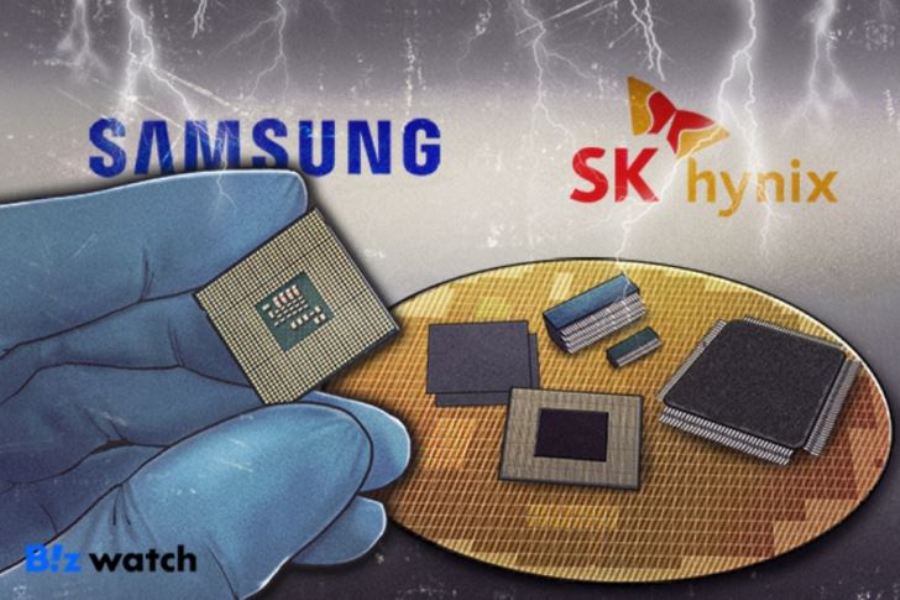
Samsung’s achievement in delivering industry-first commercial HBM4 shipments represents an undeniable tactical victory. By successfully integrating 1c DRAM with 4nm logic in advanced TC-NCF packaging while achieving breakeven yields, the company has demonstrated technological leadership that many industry observers considered unattainable. The “Samsung is back” sentiment reportedly expressed by customers carries genuine strategic weight .
However, SK Hynix’s defensive position remains formidable. The company’s 62 percent market share, proven MR-MUF packaging technology, deep partnership with TSMC, and aggressive capacity expansion collectively constitute substantial competitive advantages. The commitment to maintaining HBM3E-equivalent yields in HBM4 suggests confidence that Samsung’s early lead may prove temporary.
The ultimate victor in the Samsung versus SK Hynix HBM4 yield race will be determined not by who ships first, but by who ships most reliably, cost-effectively, and at scale. NVIDIA and other AI accelerator designers require hundreds of thousands of HBM4 stacks, not demonstration samples. Supply certainty, consistent quality, and sustained yield improvement matter more than press release timing.
For the semiconductor industry and the broader AI ecosystem, this competition yields unequivocally positive results. Samsung and SK Hynix are pushing each other to ever-greater technological achievements, accelerating the pace of HBM innovation and expanding the performance envelope available to AI system designers. The yield race ensures redundant, competitive supply sources for critical AI components, reducing systemic risk and enabling continued exponential scaling of artificial intelligence capabilities.
As HBM4 transitions from engineering achievement to volume commodity, the yield percentages achieved by Samsung and SK Hynix will determine profit distributions, market shares, and ultimately, which corporate vision of memory’s future prevails. The early 2026 skirmishes have established clear battle lines; the prolonged campaign ahead will reveal whether Samsung’s aggressive gambit or SK Hynix’s methodical defense proves strategically superior.