Artificial Intelligence agents are rapidly transforming how organizations operate, automate workflows, and interact with customers. From generative chatbots to autonomous decision-making systems, AI agents promise unprecedented levels of efficiency and insight. However, beneath the glossy surface of these intelligent systems lies a foundational element that often goes unnoticed but is absolutely critical: data governance. Without robust data governance, AI agents are not just less effective they can become liabilities. This article explores the intricate relationship between data governance and AI agents, detailing why governance is the key that unlocks true artificial intelligence capabilities, how to implement it strategically, and what the future holds for governed autonomous systems.
The Invisible Engine: Understanding Data Governance in the AI Era
Data governance has traditionally been viewed as a back-office function something for compliance officers and database administrators to worry about. This perception is outdated and dangerous. In the age of AI agents, data governance is a competitive differentiator and a strategic imperative.
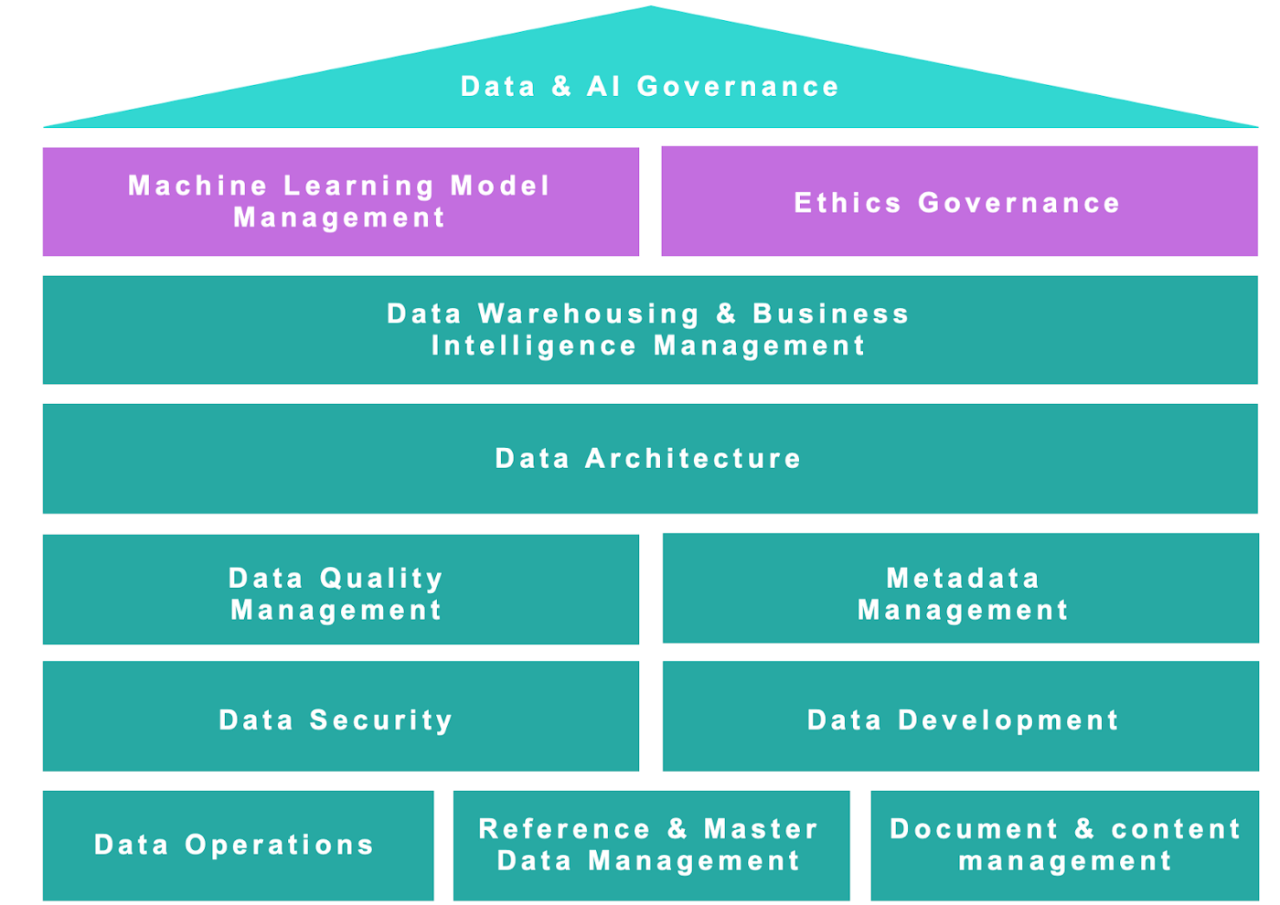
At its core, data governance encompasses the processes, policies, standards, and technologies that ensure data is secure, private, accurate, available, and used appropriately. When we introduce AI agents into the equation entities that consume data, learn from it, and make decisions based on it the importance of governance multiplies exponentially.
AI agents are fundamentally data-hungry. They require vast quantities of high-quality information to train models, retrieve contextual knowledge, and generate accurate responses. If the underlying data is flawed, biased, or unsecured, the AI agent will not only perform poorly but may actively cause harm through incorrect decisions, regulatory violations, or reputational damage.
The Symbiotic Relationship: Why AI Agents Depend on Data Governance
To understand why data governance unlocks AI agents, we must examine the specific dependencies that exist between these two domains.
A. Data Quality Determines Agent Reliability
AI agents are only as good as the data they access. An agent trained on incomplete, outdated, or inconsistent datasets will produce outputs that mirror those deficiencies. Data governance establishes frameworks for data quality—including accuracy, completeness, consistency, and timeliness. When these governance practices are in place, AI agents can operate with confidence, knowing that the information they retrieve and the patterns they learn are reliable.
B. Contextual Understanding Requires Metadata Management
Modern AI agents, particularly those powered by large language models, rely heavily on context. They need to understand not just raw data but also what that data represents, its origin, its intended use, and its limitations. This is where metadata governance becomes essential. By implementing robust metadata management practices including data lineage, business glossaries, and technical definitions organizations provide AI agents with the semantic layers they need to interpret information correctly.
C. Trust Depends on Transparency and Lineage
One of the greatest challenges with AI agents is explainability. When an agent makes a recommendation or takes an action, stakeholders need to understand why. Data governance delivers the transparency required for this trust. With proper data lineage documentation, organizations can trace exactly which datasets influenced an AI agent’s decision, enabling auditability and continuous improvement.
D. Security and Privacy Are Non-Negotiable
AI agents often require access to sensitive information customer records, financial data, intellectual property, or personal health information. Without governance, this access becomes a significant security vulnerability. Data governance establishes fine-grained access controls, data classification schemes, and privacy-preserving techniques such as anonymization and pseudonymization. These controls ensure that AI agents can only access data appropriate to their function and context.
E. Regulatory Compliance Is Automated Through Governance
As governments worldwide introduce AI-specific regulations such as the EU AI Act, GDPR, and sector-specific rules organizations must demonstrate compliance not just with their own data practices but with the behavior of their AI systems. Data governance provides the policy framework and enforcement mechanisms that enable AI agents to operate within legal boundaries automatically, rather than requiring constant human supervision.
The Consequences of Neglecting Governance
Organizations that rush to deploy AI agents without establishing corresponding governance frameworks often encounter a predictable set of failures. These cautionary tales underscore the necessity of a governance-first approach.
1. Hallucinations and Misinformation
When AI agents lack access to governed, verified data sources, they may generate plausible-sounding but entirely incorrect information. This phenomenon, known as hallucination, can have serious consequences in regulated industries such as healthcare, finance, and legal services.
2. Bias Amplification
Unchecked training data often contains historical biases related to race, gender, age, or socioeconomic status. AI agents trained on such data will not only replicate these biases but may amplify them through autonomous decision-making at scale.
3. Data Silos and Fragmentation
Without enterprise-wide governance, different AI agents may be trained on inconsistent versions of data, leading to contradictory outputs and fragmented customer experiences. A customer service agent might provide one answer while a sales agent offers conflicting information.
4. Regulatory Penalties
Regulators are increasingly holding organizations accountable for the actions of their AI systems. Without governance controls, companies may find themselves unable to explain how decisions were made, what data was used, or whether privacy requirements were satisfied.
5. Shadow AI Proliferation
When formal governance is absent, business units often create their own unauthorized AI agents using unvetted data sources and unsanctioned tools. This shadow AI presents significant security, compliance, and operational risks.
Building a Governance Framework That Empowers AI Agents
The goal is not to constrain AI agents with bureaucracy but to empower them with structure. An effective governance framework for AI agents should be designed to enable speed, innovation, and trust simultaneously.
Step 1: Establish a Data Catalog with AI Consumption in Mind
A data catalog is the foundation of AI-ready governance. Organizations must inventory their data assets and describe them in ways that AI agents can understand and utilize. This includes technical metadata, business context, quality scores, and usage policies. Modern data catalogs increasingly incorporate machine-readable interfaces, allowing AI agents to discover, evaluate, and request access to datasets autonomously.
Step 2: Implement Dynamic Access Controls
Traditional static access controls are insufficient for AI agents, which may require different data access patterns depending on context. Organizations should adopt attribute-based access control (ABAC) or policy-as-code frameworks that evaluate access requests in real time based on the agent’s identity, the user’s permissions, the sensitivity of the data, and the purpose of the request.
Step 3: Create Feedback Loops Between Governance and Operations
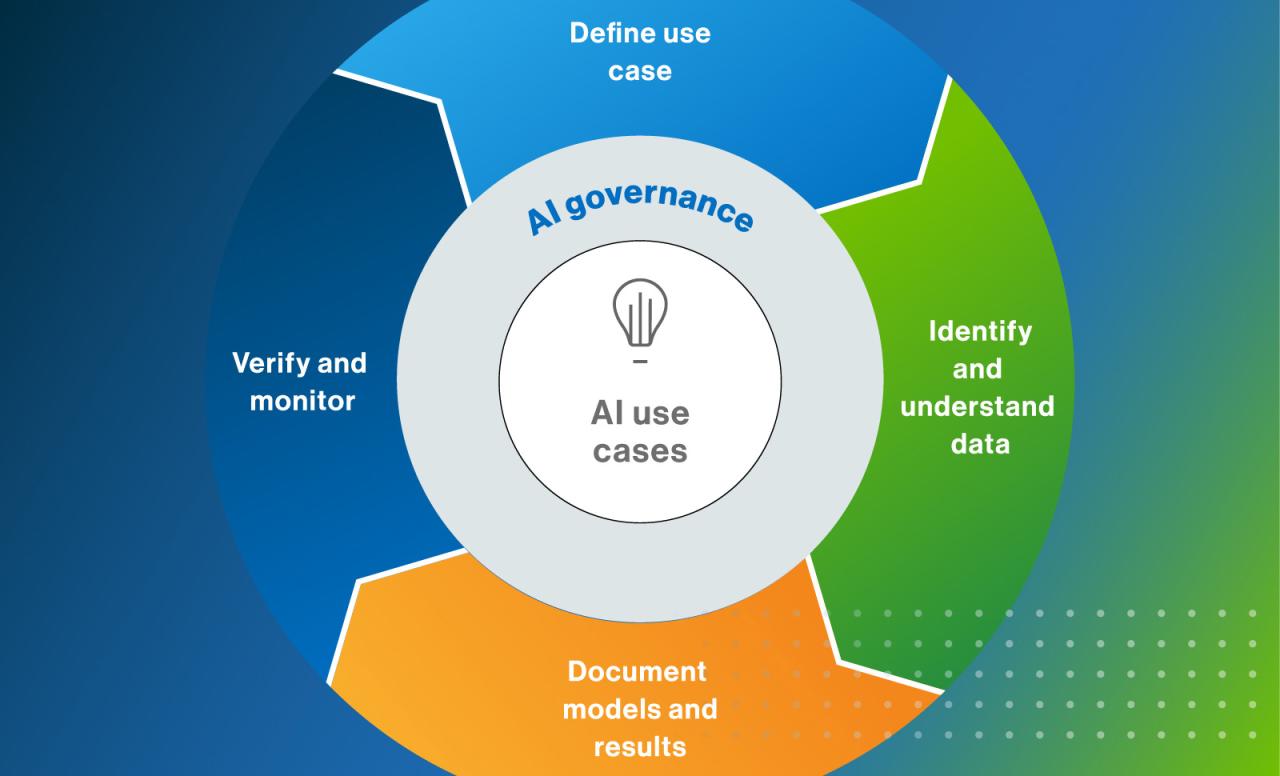
Governance should not be a one-time exercise but a continuous process. AI agents generate valuable telemetry about data quality, coverage gaps, and usage patterns. This feedback should flow back into governance systems, enabling data stewards to improve datasets, update policies, and refine metadata. This closed-loop approach creates a virtuous cycle where governance improves AI performance, and AI usage informs better governance.
Step 4: Develop AI-Specific Data Policies
Traditional data policies often focus on human consumption and manual processes. Organizations must develop new policies tailored specifically to AI agent usage. These policies should address:
-
A. Acceptable training data sources: Which datasets can be used for model training, and under what conditions
-
B. Data retention for AI contexts: How long data used by AI agents should be retained, considering both operational needs and privacy regulations
-
C. Human oversight requirements: Which AI agent decisions require human review, and what data must be presented to support that review
-
D. Bias testing protocols: Standards for evaluating and mitigating bias in datasets used by AI agents
Step 5: Embed Governance into the AI Development Lifecycle
Rather than treating governance as a gate at the end of the development process, organizations should integrate governance activities throughout the AI lifecycle. Data scientists and AI engineers should have access to governed datasets from the start, with automated checks that verify compliance with data usage policies. This shift-left approach reduces rework, accelerates development, and ensures that governance is an enabler rather than an obstacle.
The Technical Enablers: Modern Tools for Governing AI Agents
Several technology categories are emerging to support the intersection of data governance and AI agents. Organizations building AI governance capabilities should evaluate tools in these areas.
1. Active Metadata Platforms
Traditional metadata management is passive it documents what exists. Active metadata platforms continuously monitor data usage, detect anomalies, and automatically update governance artifacts. For AI agents, active metadata provides real-time awareness of data quality issues, schema changes, or policy violations.
2. Policy Engines and Authorization Systems
Modern policy engines enable organizations to define access rules in plain language and enforce them consistently across data platforms, applications, and AI agents. These systems support fine-grained controls, context-aware decisions, and comprehensive audit logging.
3. Data Observability Tools
Data observability platforms monitor the health of data pipelines and datasets, detecting issues such as freshness failures, volume anomalies, or schema drift. When integrated with AI agent workflows, these tools can prevent agents from acting on stale or corrupted data.
4. AI Governance Platforms
A new generation of specialized platforms is emerging to address the unique governance requirements of AI systems. These platforms manage model inventories, track training datasets, document model cards, and monitor model performance and fairness over time.
Organizational Culture: The Human Side of AI Governance

Technology alone is insufficient. Organizations must also cultivate a culture that values data governance as an enabler of AI innovation rather than an impediment.
A. Executive Sponsorship and Accountability
AI governance requires visible commitment from senior leadership. Organizations should designate executive owners for AI governance with clear accountability for both innovation and risk management.
B. Cross-Functional Collaboration
Effective AI governance cannot be siloed within IT or compliance functions. It requires collaboration between data stewards, legal teams, security professionals, data scientists, and business leaders. Each group brings essential perspectives on how AI agents should access and use data.
C. Continuous Education and Awareness
As AI agents become more prevalent, every employee becomes a stakeholder in data governance. Organizations should invest in training programs that help non-technical staff understand basic governance concepts and their role in maintaining data quality and security.
D. Incentives and Performance Metrics
What gets measured gets managed. Organizations should incorporate governance compliance and data quality metrics into performance evaluations for teams that develop, deploy, or support AI agents.
The Future: Autonomous Governance for Autonomous Agents
As AI agents become more sophisticated, they will increasingly participate in governance processes themselves—not as subjects of governance but as active participants in enforcing and improving governance. This concept of autonomous governance represents the next frontier.
Self-Aware Data Systems
Future AI agents will be capable of assessing their own data access requirements and requesting the necessary permissions through automated workflows. They will understand data policies and enforce them at runtime, adapting their behavior based on the sensitivity of the information they encounter.
Automated Policy Optimization
Machine learning techniques can analyze patterns of data access and usage to recommend optimal governance policies. These systems might identify that certain datasets are underutilized due to overly restrictive policies or that certain access patterns indicate emerging risks requiring new controls.
Continuous Compliance Verification
Rather than periodic audits, autonomous governance enables continuous verification that AI agents are operating within established boundaries. Automated compliance monitoring will detect deviations in real time and initiate remediation actions such as restricting access, generating alerts, or temporarily suspending agent capabilities.
Federated Governance Ecosystems
As organizations increasingly share data and AI agents across corporate boundaries, governance frameworks must become interoperable. Emerging standards for data sharing, usage policies, and digital rights management will enable AI agents to navigate multi-party governance environments while maintaining trust and compliance.
Industry Applications: Governance Unlocking AI Agents in Practice
The principles of AI governance are already delivering tangible value across industries. These examples illustrate how governance enables AI agents to solve real business problems.
Financial Services: Fraud Detection with Trust
Banks deploying AI agents for fraud detection require access to transaction histories, customer profiles, and external threat intelligence all highly sensitive data categories. By implementing comprehensive data governance including data lineage, access controls, and model documentation, financial institutions can deploy fraud detection agents that operate effectively while satisfying regulatory requirements and maintaining customer trust.
Healthcare: Clinical Decision Support
AI agents assisting physicians with diagnosis and treatment recommendations must access electronic health records, medical literature, and clinical guidelines. Governance frameworks that ensure data accuracy, patient privacy, and algorithmic fairness enable these agents to provide valuable decision support while protecting patient welfare and complying with healthcare regulations.
Manufacturing: Predictive Maintenance
Intelligent agents monitoring industrial equipment analyze sensor data, maintenance records, and operational parameters to predict failures before they occur. Governance ensures that these agents access current, accurate data and that maintenance recommendations are traceable and explainable to human operators.
Retail: Personalized Customer Experiences
Retailers using AI agents to personalize product recommendations and marketing communications rely on governed customer data. Privacy-preserving governance techniques enable personalization without compromising individual privacy rights or violating data protection regulations.
Measuring Success: KPIs for AI Governance Programs
Organizations investing in data governance to enable AI agents should establish metrics that demonstrate progress and business impact.
1. Time to Deployment
Measure how quickly new AI agents can be developed and deployed when governed datasets are readily available compared to ungoverned alternatives.
2. Data Discovery Efficiency
Track the time required for data scientists and AI engineers to locate, evaluate, and access relevant datasets for agent development.
3. Incident Frequency and Severity
Monitor incidents involving AI agents, including hallucinations, bias complaints, security breaches, or compliance violations. Effective governance should reduce both the frequency and impact of these incidents.
4. Audit Success Rates
Measure the percentage of AI agent decisions that can be fully traced to governed data sources with complete lineage documentation.
5. User Trust Metrics
Survey internal and external users of AI agents to assess their confidence in the accuracy, fairness, and security of agent outputs.
Conclusion: Governance as the Gateway to Agentic AI
The promise of AI agents is immense systems that reason, learn, and act autonomously to augment human capabilities and drive business value. But this promise cannot be realized without intentional, systematic investment in data governance. Governance is not the enemy of AI innovation; it is the gateway.
Organizations that recognize this relationship and act decisively to build governance capabilities will unlock the full potential of their AI agents. They will deploy agents that are not only intelligent but also trustworthy, not only autonomous but also accountable. In the emerging landscape of agentic AI, governed organizations will lead while ungoverned organizations will struggle with the consequences of their neglect.
The path forward requires commitment, investment, and cultural change. But the destination a world where AI agents operate as trusted partners in human endeavor is well worth the journey. Data governance unlocks AI agents, and AI agents, properly governed, unlock extraordinary possibilities for innovation, efficiency, and progress.