
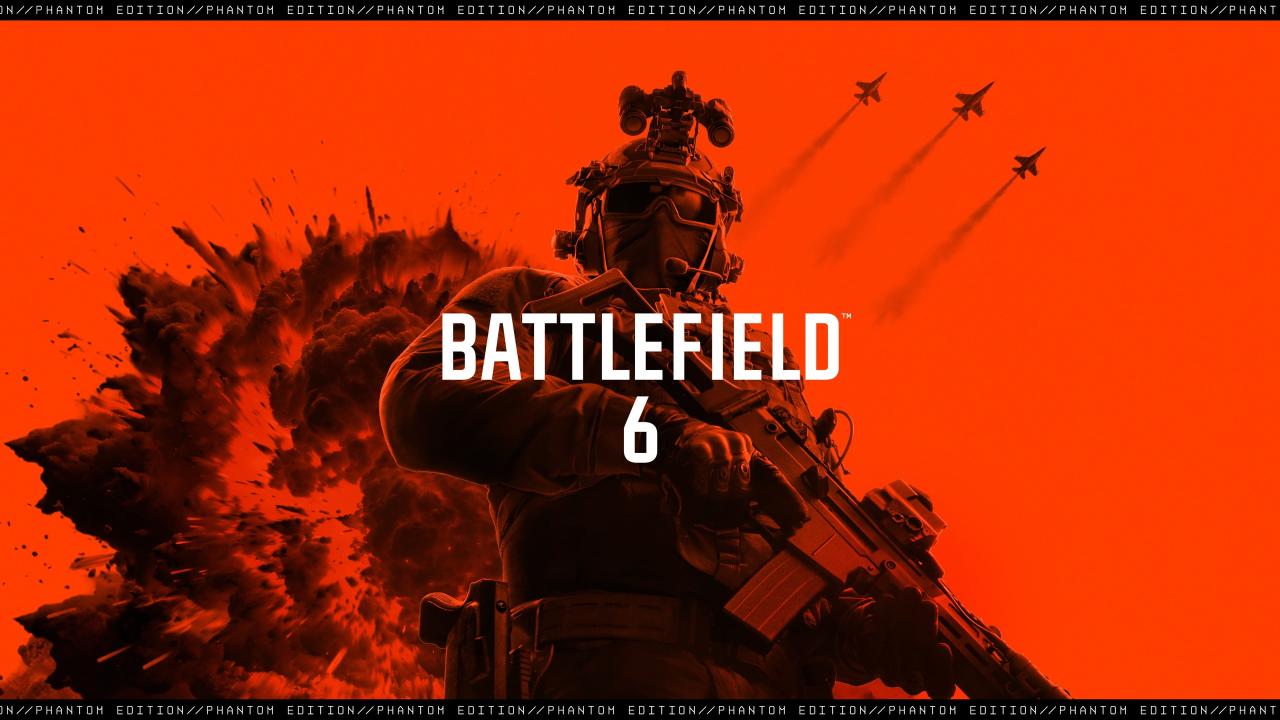
The gaming world has been buzzing with anticipation for the next installment in the legendary Battlefield franchise. However, what should have been a moment of celebration has quickly descended into heated debate. Battlefield 6, the upcoming title from Electronic Arts and DICE, finds itself at the center of a fierce controversy involving artificial intelligence, artistic integrity, and the very soul of game development. As leaked concept art and promotional materials surface online, sharp-eyed fans have raised alarming questions about the possible use of AI-generated artwork in one of gaming’s most prestigious military shooter series.
The Spark That Ignited the Firestorm
It began innocently enough. A handful of concept images leaked onto social media platforms, showcasing the gritty, war-torn environments that Battlefield fans have come to love. But something felt… off. Veteran players and digital artists alike noticed peculiar inconsistencies in these visuals strange architectural impossibilities, nonsensical weapon attachments, and that distinctive “dreamlike” quality often associated with AI image generators like Midjourney and Stable Diffusion.
What started as whispers in niche gaming communities quickly escalated into a full-blown investigation. Digital forensics experts within the gaming community began dissecting every pixel, applying reverse image searches and analyzing compression artifacts. Their conclusion sent shockwaves through the industry: strong evidence suggested that EA and DICE had employed generative AI tools to produce concept art for Battlefield 6 rather than commissioning human concept artists.
Understanding the AI Art Technology at the Center of the Debate
To fully comprehend why this controversy carries such weight, we must first understand what AI art actually is and how it functions. Generative AI models are trained on massive datasets containing millions of images scraped from across the internet. These systems learn to recognize patterns, styles, and compositions, then generate new images based on textual prompts provided by users.
Tools like Midjourney, DALL-E, and Stable Diffusion can produce stunningly realistic or beautifully stylized artwork in seconds work that might take a human artist days or weeks to complete. The efficiency is undeniable. However, these systems do not create in the way humans do. They remix and recombine existing imagery, often without permission from or compensation to the original artists whose work populated their training data.
For Battlefield fans, the concern extends beyond philosophical objections. The Battlefield series has always prided itself on authenticity and attention to detail. Military hardware is rendered with painstaking accuracy. Real-world weapons function according to their genuine specifications. Battlefield games have even been praised by active-duty military personnel for their realistic depiction of combined arms warfare. The introduction of AI-generated artwork threatens this hard-won reputation for authenticity.
The Specific Allegations Against Battlefield 6
The controversy surrounding Battlefield 6 centers on several distinct allegations that have emerged through community investigation:
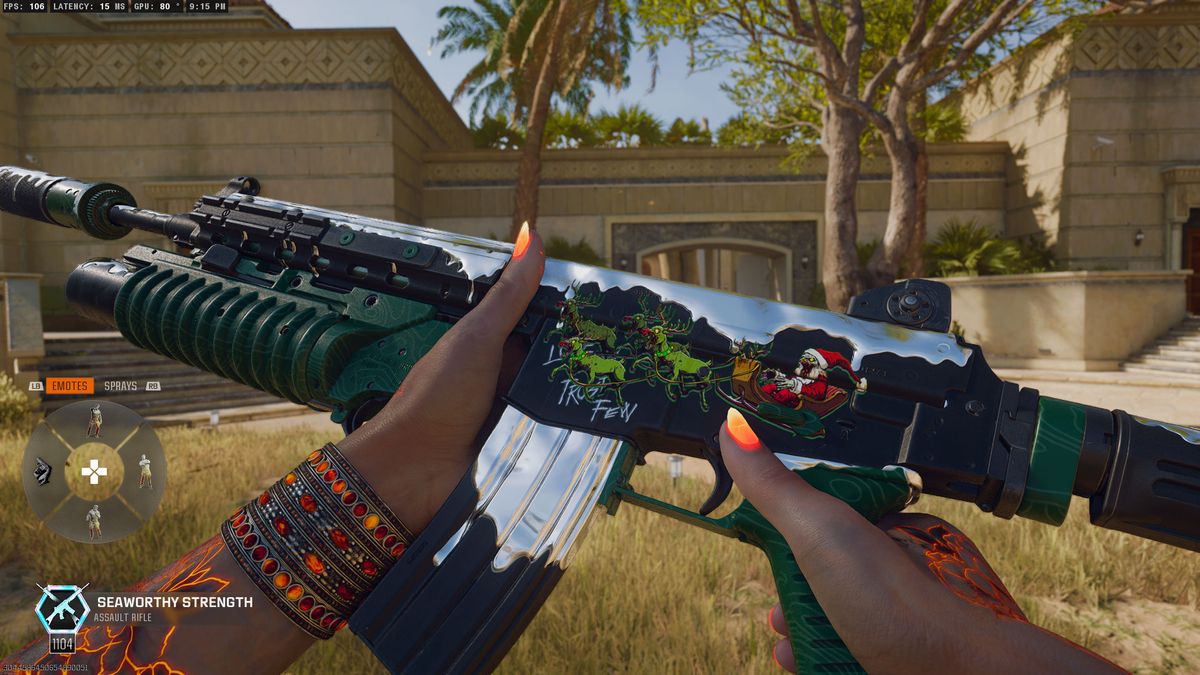
A. Suspicious Concept Art: Multiple pieces of leaked concept art display characteristic “AI tells” strange texture blending, objects that morph into one another, architectural elements that defy physics, and background details that dissolve into incomprehensible patterns.
B. Inconsistent Weapon Design: Firearms depicted in promotional materials show bizarre configurations, including magazine wells positioned incorrectly, iron sights that serve no functional purpose, and hybrid weapons that combine elements from incompatible platforms.
C. Uniform Irregularities: Military uniforms appear with mixed camouflage patterns, insignia placement that violates standard military protocol, and equipment attachments that attach to nothing or float disconnected from the uniform itself.
D. Architectural Impossibilities: Building structures exhibit nonsensical support systems, staircases leading nowhere, and perspective issues that trained artists would instinctively avoid.
E. The “Shiny” Artifact Problem: Certain textures display an unnatural glossiness and oversaturation characteristic of AI image synthesis, lacking the deliberate artistic choices a human concept artist would make.
F. Missing Artist Credits: Eagle-eyed observers noted that recent Battlefield 6 promotional materials lack specific artist attributions, a departure from previous franchise marketing where concept artists received prominent recognition.
Industry Context: Gaming’s Troubled Relationship with AI
Battlefield 6 is hardly the first game to face such accusations. The video game industry has been grappling with the integration of artificial intelligence across multiple disciplines. Several major studios have experimented with AI-assisted asset generation, procedural world-building, and even AI-written dialogue.
Square Enix publicly announced its aggressive pursuit of AI integration in game development. Ubisoft has employed AI tools for years, though primarily for procedural generation of terrain and non-player character behaviors rather than creative artwork. Even indie developers have embraced tools like ChatGPT and Midjourney to compensate for limited budgets and small team sizes.
What makes the Battlefield 6 situation distinct is the franchise’s legacy and the specific nature of the alleged implementation. Battlefield is not a small indie experiment; it is a AAA behemoth with development budgets exceeding hundreds of millions of dollars. Electronic Arts reported net revenue of approximately $7.6 billion in their most recent fiscal year. This is not a studio struggling to afford artistic talent it is one of the wealthiest publishers in the entire entertainment industry.
The Human Cost: What This Means for Working Artists
Behind the algorithmic debate lies a profoundly human story. Concept artists have long occupied a revered position in game development. These are the visionaries who establish the visual identity of entire game worlds, whose sketches and paintings guide the work of hundreds of 3D modelers, texture artists, and level designers.
For decades, concept art has represented one of the few accessible entry points into the game industry for young artists. A strong portfolio showcasing imaginative environments and character designs could open doors to studio careers. If publishers determine that AI can adequately generate concept art, this critical gateway may close forever.
Professional concept artists who have worked on previous Battlefield titles have begun speaking out, though most request anonymity due to non-disclosure agreements and fear of industry blacklisting. One former DICE artist described the situation as “devastating” but not unexpected.
“We saw this coming years ago,” they explained. “Management has always viewed art as a cost center rather than a creative investment. The question was never whether they would replace us with machines, but when.”
Another industry veteran with credits on multiple AAA military shooters expressed frustration with the assumption that AI tools simply assist human artists. “That’s the narrative they want to sell you that AI is just another tool like Photoshop or a Wacom tablet. But Photoshop doesn’t generate complete artwork from three words typed into a text box. These tools don’t augment human creativity; they attempt to supersede it.”
The Quality Question: Is AI Art Actually Good Enough?
Perhaps the most galling aspect of the controversy for Battlefield loyalists is the apparent decline in artistic quality. Even setting aside ethical considerations, the alleged AI-generated concept art simply does not meet the standards long associated with the franchise.
Previous Battlefield games featured concept work from legendary artists whose illustrations captured both the grand scale of combined arms warfare and the intimate human moments between soldiers. These images conveyed narrative, emotion, and tactical understanding. They demonstrated deep knowledge of military equipment, terrain, and combat doctrine.
The suspicious Battlefield 6 materials, by contrast, appear generic and derivative. They borrow compositional elements from other war games and action films without understanding why those compositions worked in their original contexts. Military equipment is rendered incorrectly. Tactical situations make little sense. The soul that human artists brought to previous titles seems conspicuously absent.
This artistic decline matters because concept art shapes everything that follows. When concept artists make mistakes or cut corners, those errors propagate through the entire development pipeline. 3D modelers working from flawed concept art may inadvertently perpetuate inaccuracies. Lighting artists responding to AI-generated mood boards may miss critical atmospheric cues. The final product suffers from accumulated compromises.
Community Reaction: A Divided Fanbase
The Battlefield community has responded to these allegations with the predictable chaos of a shell-scarred battlefield. Player opinions span the entire spectrum from fierce defense of EA to demands for boycotts.
Many longtime fans express profound disappointment. For them, Battlefield represents more than just another first-person shooter. It is a franchise built on technical excellence and artistic ambition. The idea that this legacy would be compromised for marginal cost savings feels like a betrayal of everything the series once represented.
“I’ve been playing since Battlefield 1942,” wrote one devastated fan on the official forums. “I defended this franchise through Battlefield Hardline, through Battlefield V’s historical inaccuracies, through 2042’s disastrous launch. But this? Replacing actual artists with a plagiarism machine? I can’t defend that.”
Others adopt a more pragmatic stance. They argue that if AI tools help DICE deliver Battlefield 6 faster or with more content, the specific methods matter less than the final product. Some even express excitement about the artistic possibilities of generative AI, envisioning procedurally generated battlefield environments that offer near-infinite variety.
A third faction remains skeptical that AI was actually employed. These defenders point to the lack of official confirmation from EA and suggest that overzealous fans are seeing patterns that don’t exist. They attribute the artistic inconsistencies to rushed work from overworked human artists itself a valid criticism of modern game development practices but a different issue entirely.
EA and DICE’s Response: Silence and Evasion
To date, official response from Electronic Arts and DICE has been characterized by careful avoidance. Neither company has directly confirmed or denied using AI-generated artwork in Battlefield 6’s development or marketing.
When contacted for comment by major gaming publications, EA provided carefully worded statements about embracing “innovative technologies” and “leveraging appropriate tools” to create “immersive and authentic Battlefield experiences.” No specific mention of AI, concept art, or the ongoing controversy appeared in any official communication.
This strategic ambiguity only intensified community suspicion. Industry observers noted that when innocent of such allegations, publishers typically issue swift, unequivocal denials. The refusal to directly address the AI art question suggests either an inability to deny the practice or a legal strategy designed to avoid admitting liability before potential lawsuits from artists whose work may have been used without consent in AI training data.
Legal Landscape: The Unsettled Question of AI Copyright
Compounding EA’s predicament is the extremely unsettled legal environment surrounding AI-generated artwork. Current copyright law, both in the United States and internationally, was written long before generative AI existed and has not yet adapted to address the unique questions these technologies raise.
The United States Copyright Office has issued guidance indicating that works generated entirely by AI with no human creative input are not eligible for copyright protection. However, works that combine AI generation with substantial human authorship may qualify for limited protection covering only the human-contributed elements.
For a company like Electronic Arts, this creates significant risk. If Battlefield 6 incorporates substantial amounts of AI-generated artwork that cannot be copyrighted, competitors might be legally entitled to copy those visual elements freely. Worse still, if the AI models were trained on copyrighted images without proper licensing, EA could face devastating infringement lawsuits from thousands of working artists.
Several class-action lawsuits against AI companies are currently working their way through the court system, brought by artists who claim their copyrighted works were illegally scraped and used to train commercial AI systems. The outcomes of these cases could establish precedents that reshape the entire generative AI landscape.
The Ethical Argument: Originality vs. Appropriation
Beyond legal considerations, the Battlefield 6 controversy touches on fundamental ethical questions about creativity, ownership, and the nature of art itself.
Generative AI systems do not create in a vacuum. They require massive training datasets comprising millions of human-made images. Much of this data was collected by indiscriminately scraping the internet, capturing copyrighted artwork, personal photographs, medical images, and private family pictures alike. The artists who created this training data gave no permission and received no compensation.
When an AI generates an image based on a prompt like “military soldier futuristic combat battlefield concept art,” it is effectively remixing the labor of thousands of illustrators, photographers, and designers whose work populated its training set. The resulting image may not directly copy any single source, but it could not exist without the unauthorized appropriation of countless creative works.
This process fundamentally differs from human artistic influence. Human artists study existing works, internalize principles and techniques, and synthesize new creations that reflect their unique perspective and experience. The law recognizes this distinction through concepts like “transformative use” in copyright jurisprudence. Whether AI systems transform training data in legally acceptable ways remains an open question.
The Precedent Battlefield 6 Sets for the Industry
Perhaps the most significant aspect of this controversy is the precedent it establishes. If Battlefield 6 launches successfully while employing AI-generated artwork, other major publishers will inevitably follow. The economic logic is simply too compelling to ignore.
Consider the financial incentives. A senior concept artist with industry experience commands a salary between $70,000 and $120,000 annually, plus benefits. A full concept art team for a major Battlefield title might include a dozen or more artists working across multiple years. The total investment in human artistic talent for a single game can easily exceed several million dollars.
By contrast, Midjourney subscriptions cost approximately $30 per month. Stable Diffusion can be run locally on consumer hardware at negligible marginal cost. Even accounting for prompt engineers, art directors, and the need for human refinement, the potential cost savings are enormous.
Publishers operate within competitive markets and face constant pressure to maximize shareholder returns. If EA can successfully reduce artistic labor costs through AI implementation while maintaining sales, competitors must either adopt similar practices or accept a permanent cost disadvantage. The industry-wide adoption of AI art generation becomes not merely possible but inevitable.
For gamers who value artistic craftsmanship, this represents an existential threat to the medium. Video games have evolved from simple programming exercises into sophisticated art forms precisely because talented artists brought their unique visions to interactive entertainment. Reducing artistic creation to algorithmic content generation threatens to transform gaming from a creative industry into a purely extractive one.
The Path Forward: What Battlefield 6 Should Do
As the controversy continues to develop, several potential resolutions have emerged from community discussions and industry analysis. Each carries different implications for EA, DICE, and the broader gaming landscape.
Full Transparency: The most straightforward approach would involve EA publicly disclosing exactly how AI tools were used in Battlefield 6’s development. Which specific assets, if any, were AI-generated? What human review and refinement processes were applied? What steps were taken to ensure training data was ethically sourced? Transparency would not eliminate objections, but it would demonstrate respect for the gaming community’s legitimate concerns.
Artist Compensation: If AI tools were trained on unauthorized artwork, EA could establish a compensation fund for affected creators. While this would not undo the initial appropriation, it would acknowledge the value of human artistic labor and provide meaningful support to working artists. Some commentators have suggested that major publishers adopting AI tools should contribute to universal basic income programs for displaced creative workers.
Human-AI Collaboration Framework: Rather than replacing human artists with AI systems, DICE could model a collaborative approach where AI serves as an ideation tool while human artists maintain creative control and receive proper attribution. This framework would embrace technological innovation while preserving the human artistry that defines the franchise.
Commitment to Artistic Labor: EA could publicly commit to maintaining robust in-house art teams and limiting AI usage to non-creative applications. Such a commitment would differentiate Battlefield from competitors and appeal to gamers who prioritize artistic integrity. Given EA’s historical focus on profitability, this outcome appears least likely.
Conclusion: More Than Just Pixels
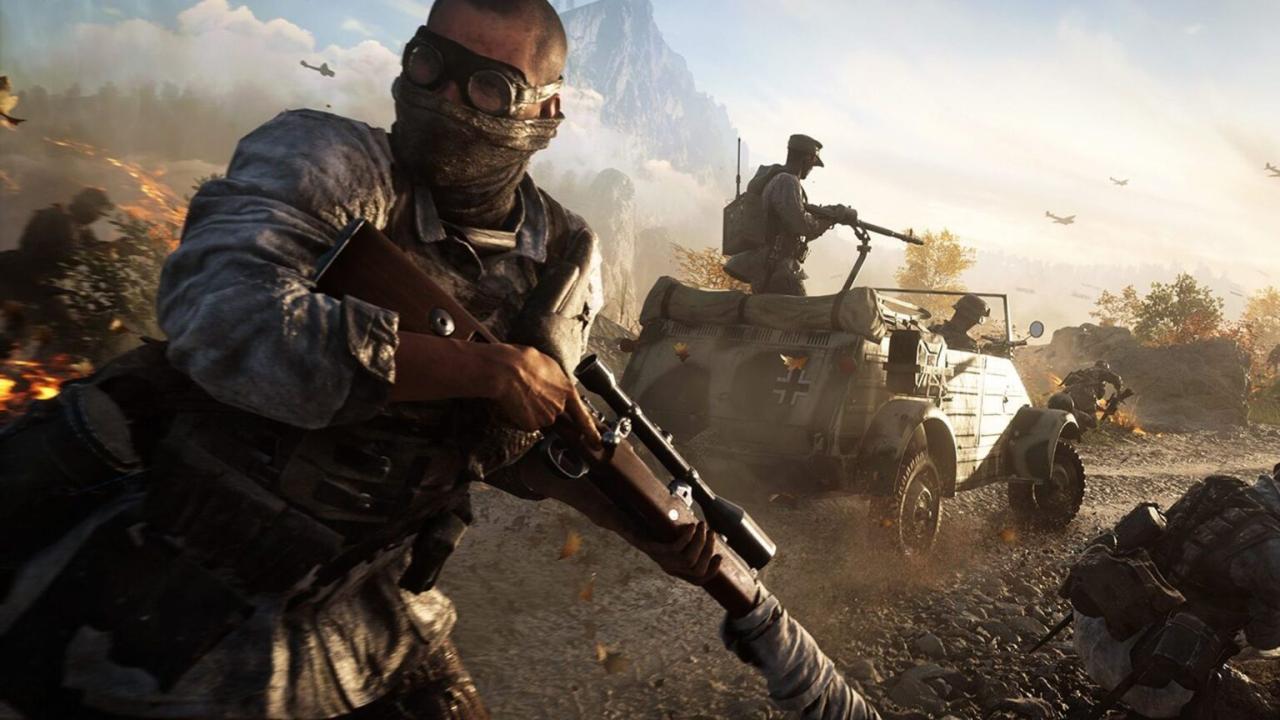
The Battlefield 6 AI art controversy transcends any single video game or company. It represents a pivotal moment in the ongoing negotiation between human creativity and machine efficiency. How this conflict resolves will shape not only the future of the Battlefield franchise but the entire interactive entertainment industry.
For DICE and Electronic Arts, the path forward requires difficult choices. Do they double down on algorithmic content generation, accepting the ethical costs and community backlash in exchange for reduced production expenses? Or do they recommit to the human artistry that elevated Battlefield from a technical curiosity to a cultural institution?
For gamers, the controversy demands reflection on what we truly value in interactive entertainment. Is a video game merely a collection of functional assets and systems, each interchangeable and disposable? Or do we recognize game development as fundamentally a human endeavor an expression of creative vision, technical skill, and artistic passion that machines can simulate but never genuinely replicate?
The answers to these questions will determine whether Battlefield 6 launches as merely another first-person shooter or as a defining statement about the kind of industry gaming chooses to become.
As one veteran concept artist eloquently stated: “Pixels are cheap. Ideas are expensive. But souls? Souls are irreplaceable.