
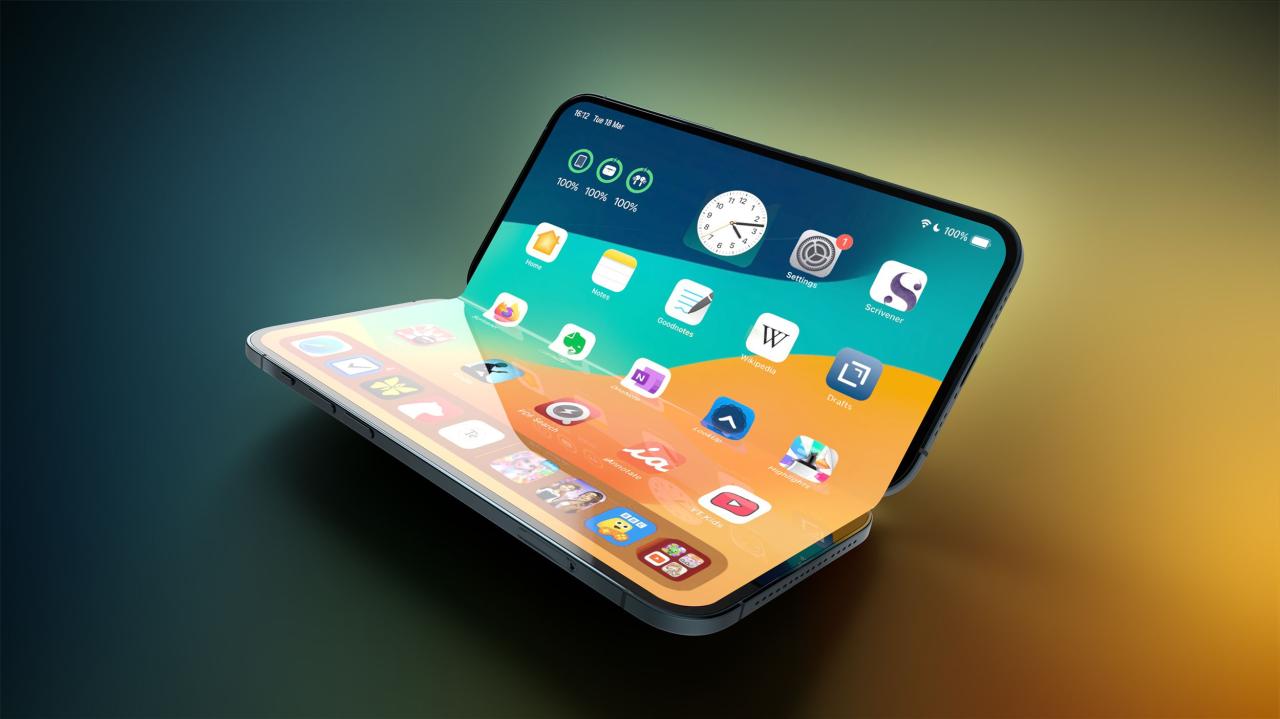
The conversation surrounding foldable smartphones has, for the better part of half a decade, been dominated by a single, unavoidable compromise: the crease. Since Samsung unveiled the original Galaxy Fold, consumers have been forced to accept a visible valley running down the center of their expensive displays a permanent reminder that the technology, while impressive, was not yet mature. Apple, conspicuously absent from this rapidly growing category, has been watching, waiting, and most importantly, engineering. Recent intelligence gleaned from supply chain analysts, display specialists, and confidential roadmaps suggests that the wait is nearly over. Apple is preparing to unveil its first foldable iPhone in late 2026, and if the leaks are accurate, it will not merely compete with existing foldables; it will render them obsolete .
This article offers a deep dive into Apple’s forthcoming “crease-free” revolution. We will dissect the specific mechanical and material innovations that allegedly eliminate the dreaded fold line, explore the device’s radical industrial design, analyze the strategic implications of Apple’s decision to wait, and project how this single device could reshape the entire mobile computing landscape for the next decade.
The Quest for the Invisible Fold
For years, Apple’s reluctance to enter the foldable arena was widely misinterpreted. Rival manufacturers and impatient consumers viewed the company’s silence as a sign of technical inferiority a suggestion that Apple simply could not figure out how to build a bending phone. However, as the narrative surrounding the 2026 iPhone Fold solidifies, a different truth has emerged: Apple refused to release a foldable until the crease was completely, unequivocally, and permanently solved .
Why the Crease Has Historically Been Unavoidable
To understand Apple’s breakthrough, one must first understand the physics of the problem. Traditional foldable displays utilize a multi-layer stack. At the bottom lies a support plate, usually made of stainless steel or carbon fiber reinforced plastic. Above that sits the OLED panel itself, encapsulated by ultra-thin glass (UTG). When the device folds, the inner radius of the bend compresses, and the outer radius expands. The support plate must bend without permanently deforming, and the glass must flex without fracturing. The “crease” is not merely a cosmetic shadow; it is a physical deformation of the UTG layer and the adhesive layers beneath it. Over thousands of cycles, these materials “relax” into a slightly bent state, creating the permanent valley .
Apple’s Multi-Pronged Attack on the Crease
According to a convergence of reports from analysts Ming-Chi Kuo and Jeff Pu, Apple’s strategy to defeat the crease relies on three distinct technological pillars operating in concert.
1. The Liquid Metal Hinge System
The hinge is the heart of any foldable, and Apple is reportedly constructing this heart from a material it has experimented with for over a decade: liquid metal. Also known as amorphous alloy, this material lacks the crystalline structure of standard steel or titanium. Because there are no grain boundaries, the metal exhibits extraordinary elasticity and fatigue resistance. Unlike traditional hinges that rely on interlocking gears that wear down over time, Apple’s liquid metal hinge is designed to return to a precise neutral state after millions of folds. This ensures that the two halves of the display meet on a perfectly flat plane, eliminating the “tent” effect seen on competitors where the phone refuses to lie completely flat .
2. The Laser-Drilled Metal Support Plate
Beneath the OLED panel, Apple has co-developed a component with South Korean supplier Fine M-Tec: a laser-drilled metal plate. This plate is not solid; it contains thousands of microscopic perforations strategically placed along the bending axis. These perforations serve as stress relief channels. When the device is folded, the compressive forces are dispersed through these tiny voids rather than concentrated along a single hard line. This prevents the metal from taking a “set” over time, meaning that even after years of use, the screen springs back to a perfectly flat state. This technology was previewed by Samsung Display at CES 2026, where industry insiders reported that the demo unit exhibited “no crease at all,” even under harsh side lighting .
3. Ultra-Thin Flexible Glass with Variable Thickness
While Samsung and Huawei have utilized UTG for years, Apple is reportedly implementing a next-generation variant known as Ultra-Flexible Glass (UFG). The innovation here lies in the variable thickness gradient. Rather than maintaining a uniform thickness across the entire panel, the glass is chemically etched to be thinner precisely along the fold line and thicker across the vast real estate of the display halves. This allows the glass to bend with significantly less mechanical resistance, reducing the internal stresses that typically cause micro-cracking and visible deformation .
Specifications: The Architecture of the iPhone Fold
While the elimination of the crease is the headline, the supporting cast of specifications suggests that the iPhone Fold will be one of the most technically dense devices Apple has ever produced. The following breakdown synthesizes the most consistent rumors across multiple authoritative sources.
Display Dynamics: Two Screens, One Vision
The iPhone Fold is expected to adopt a “book-style” form factor, similar in concept to the Samsung Galaxy Z Fold series but distinctly Apple in its proportions.
-
Cover Display: A 5.49-inch OLED screen with a resolution of approximately 2,088 x 1,422. Unlike the tall, narrow cover screens found on Android foldables, Apple is rumored to prefer a squatter, wider aspect ratio. This makes the closed device feel like a conventional iPhone when typing and browsing, rather than a remote control .
-
Main Display: When unfolded, users will be greeted by a 7.8-inch OLED panel with a 4:3 aspect ratio and a resolution of 2,713 x 1,920. This aspect ratio is critical; it mirrors that of the iPad, ensuring that iPadOS-derived applications and split-screen multitasking layouts translate seamlessly without awkward letterboxing .
-
Technology Stack: Both displays will utilize a hybrid OLED structure incorporating Color Filter on Encapsulation (CoE). This process replaces the traditional polarizer layer, which blocks some light output, with a color filter. The result is a display that is significantly thinner, more power-efficient, and capable of higher brightness levels without draining the battery .
The Silicon Heart: A20 and the 2nm Transition
Under the hood, the iPhone Fold will be powered by the A20 chip, fabricated on TSMC’s groundbreaking 2-nanometer process node. This transition from 3nm to 2nm is not an incremental bump; it represents a fundamental leap in transistor density. Early estimates suggest a 15% performance increase and a 30% reduction in power consumption compared to the A19 series .
Furthermore, the A20 is expected to utilize TSMC’s Wafer-Level Multi-Chip Module (WMCM) packaging. This sophisticated integration technique stacks the DRAM directly onto the processor wafer. By shortening the physical distance data must travel between the CPU, GPU, and RAM, Apple can achieve latency reductions that are particularly beneficial for Apple Intelligence features and real-time split-screen rendering .
The Camera System: Megapixels and Disappearing Lenses
Apple’s camera strategy for the Fold represents a significant divergence from the Pro series.
Rear Array:
The back of the device is expected to house a dual-camera system, omitting the dedicated telephoto lens found on the Pro Max. However, both the Main and Ultra Wide lenses are rumored to be 48-megapixel sensors. This suggests that Apple may rely on high-resolution digital cropping to achieve optical-quality zoom, saving internal space that would otherwise be consumed by a periscope mechanism .
Front-Facing and Internal Imaging:
In a move that echoes the industry’s push toward “bezel-less” futures, the iPhone Fold will reportedly feature a hole-punch camera on the cover display a first for Apple, breaking the company’s long-standing loyalty to the notch and Dynamic Island. More impressively, the internal 7.8-inch display will house a 24-megapixel under-display camera (UDC) . When the camera is not in use, the pixels above the sensor illuminate normally, rendering the lens invisible. When activated, the pixels become transparent, allowing light to reach the sensor. At 24 megapixels, this would be the highest-resolution under-display camera ever deployed in a smartphone .
Biometrics: The Return of Touch ID
Perhaps the most controversial design decision involves authentication. Multiple analysts, including Kuo, have stated that the iPhone Fold will not include Face ID. The Face ID module, with its dot projector, flood illuminator, and infrared camera, occupies valuable vertical space that simply does not exist in the ultra-thin chassis. Instead, Apple is resurrecting Touch ID, integrating the capacitive sensor into the power button located on the side frame—a solution currently employed on the iPad Air and iPad mini .
Battery and Charging
Foldable phones have historically struggled with battery life due to the immense power demands of a large, high-refresh-rate display. Apple is addressing this through two parallel strategies.
-
Cell Capacity: The iPhone Fold is rumored to house a dual-cell battery pack with a total capacity between 5,400 mAh and 5,800 mAh. This would be the largest battery Apple has ever placed inside an iPhone, surpassing the 5,088 mAh cell of the iPhone 17 Pro Max .
-
Power Efficiency: Beyond the cell size, Apple has optimized the display driver integrated circuit (DDI), shrinking it from 28nm to 16nm. This reduction allows the screen to refresh itself with significantly less leakage current, extending longevity during reading and video playback .
The Extended Roadmap: Beyond the iPhone Fold
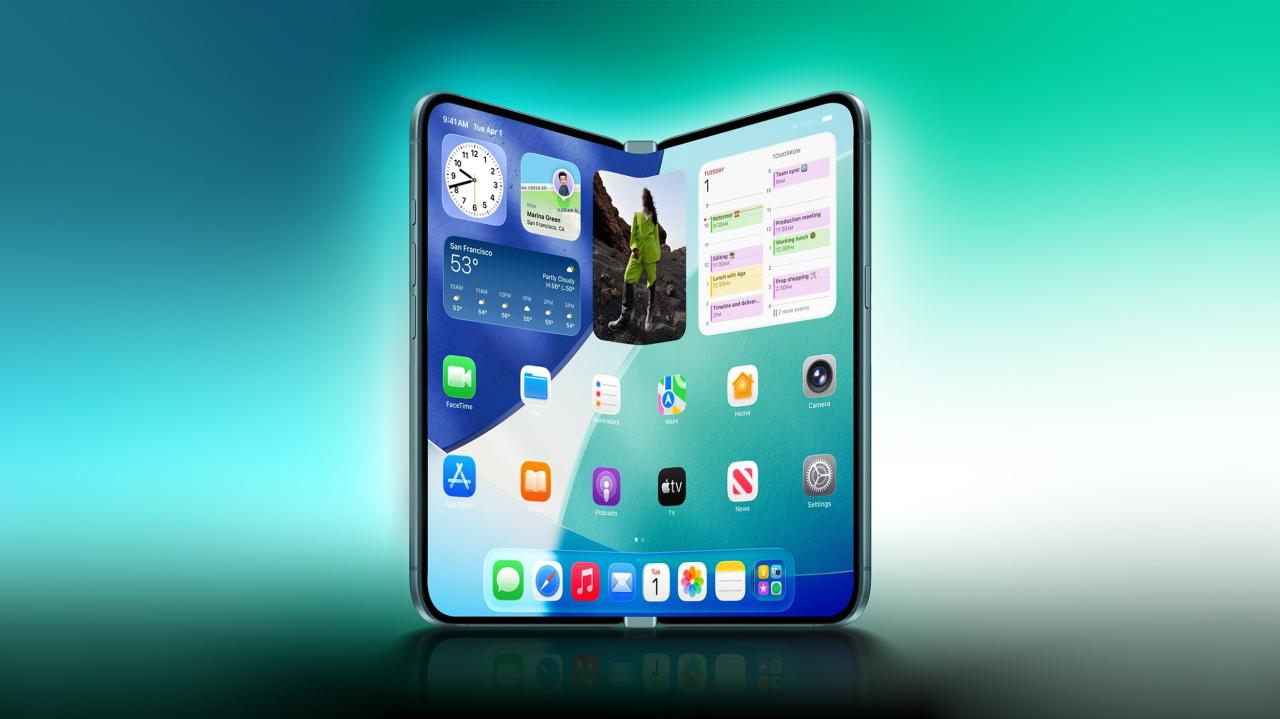
While the iPhone Fold will capture the lion’s share of consumer attention, it is critical to view this device not as a standalone experiment, but as the opening salvo in Apple’s broader “Foldable Matrix” strategy. According to extensive reporting from Bloomberg’s Mark Gurman and analyst Ross Young, Apple is simultaneously developing at least two additional foldable products that will cascade to market in the following years .
2027-2028: The iPhone Flip
Following the book-style iPhone Fold, Apple is expected to introduce a clamshell-style foldable, likely branded as the iPhone Flip. This device will target the fashion-forward, compact segment currently occupied by the Samsung Galaxy Z Flip and Motorola Razr. Rumors suggest the Flip will prioritize portability and style, featuring a curvier industrial design and a large cover screen optimized for widgets, notifications, and AI-driven shortcuts .
2028: The Foldable iPad / MacBook Hybrid
The most ambitious product in Apple’s pipeline is not a phone at all, but a 20.3-inch foldable computing device. This product defies easy categorization. When folded, it approximates the footprint of a 13-inch MacBook. When unfolded, it reveals a massive 20-inch display that could function as an external monitor, a gigantic iPad, or when paired with a virtual or physical keyboard a desktop-class Mac. This device represents the ultimate convergence of iPadOS and macOS, and analysts predict it will carry a price tag exceeding $3,000, positioning it as a halo product for creative professionals .
The “Why Now?” Analysis: Timing the Market
A recurring question persists: If Apple has always possessed the engineering talent to build a foldable, why launch in 2026 rather than 2021 or 2022?
The answer lies at the intersection of technology maturity, supply chain readiness, and market necessity.
A. Component Maturity
Early foldable displays suffered from catastrophic failure rates. Delamination, pixel death along the fold line, and ingress of dust through the hinge mechanism were rampant. It was not until 2024 and 2025 that display manufacturers achieved the yield rates necessary to supply millions of units to a company with Apple’s quality control standards. The specific CoE and UFG technologies required for a crease-free experience simply did not exist at scale five years ago .
B. The Software Imperative
Apple’s greatest competitive advantage is not its hardware; it is the integration between hardware and software. Launching a foldable requires a rethinking of iOS interaction paradigms. Apple has spent the last several iOS iterations quietly building the foundation for this shift. The introduction of the split-view App Switcher, the refinement of Drag and Drop, and the expansion of Stage Manager are all preparatory steps. By waiting, Apple ensured that the day the iPhone Fold ships, thousands of applications will already support its unique 4:3, multi-window environment an advantage Android manufacturers still struggle to achieve .
C. The Stagnation of the Slab
Perhaps the most cynical, yet realistic, reason for the timing is the maturation of the traditional smartphone market. The differences between the iPhone 14 and the iPhone 17, while meaningful in terms of chip speed and camera quality, are visually indistinguishable to the average consumer. The “tech-tainment” of the annual September keynote has diminished. Apple needs a new form factor to re-invigorate upgrade cycles among the massive installed base of iPhone 12 and 13 users who are holding onto their devices longer than ever before .
Market Positioning and Pricing Strategy
There is no sugarcoating the anticipated price point. The iPhone Fold is expected to command a starting price between $2,000 and $2,500 in the United States. In international markets like India, this could translate to a starting price north of ₹1,70,000 after duties .
This pricing serves a dual purpose.
-
Segmentation: It places the device firmly in the “Ultra” tier, distinct from the Pro and Pro Max models. This justifies the investment in expensive components like the liquid metal hinge and custom Samsung display.
-
Demand Management: Apple is reportedly preparing only 8 to 10 million units for the 2026 launch window. This is a relatively conservative run rate compared to the 90+ million iPhones Apple sells annually. A high price acts as a natural demand regulator, ensuring that supply does not catastrophically outstrip production capacity .
Addressing Consumer Skepticism
Despite the technological marvels described, a vocal segment of the Apple user base remains skeptical. Common refrains include concerns about fragility, the thickness of the folded stack, and the perceived “gimmick” nature of folding screens .
Apple appears to be addressing these head-on.
Durability: Beyond the liquid metal hinge, the chassis is rumored to utilize a titanium-stainless steel alloy. Titanium offers superior strength-to-weight ratio compared to stainless steel, while the steel content provides the necessary spring characteristics for the frame. Furthermore, Apple has patented “self-healing” screen technologies. While the first-generation device may not feature full autonomic healing of deep scratches, patents describe a transparent elastomer layer capable of flowing into minor surface depressions when exposed to heat or electrical current generated by the device during charging .
Thickness Management: When closed, the iPhone Fold is expected to measure between 9mm and 9.5mm. While thicker than a standard iPhone, it is competitive with other book-style foldables. When opened, the device slims down to an astonishing 4.5mm to 4.8mm thinner than the current iPad Pro, which itself is marketed as the thinnest device of its class .
Conclusion: The Fold Heard Round the World

The arrival of Apple in the foldable space represents a watershed moment for the consumer electronics industry. For years, the foldable category has existed in a state of perpetual “almost.” Almost good enough. Almost durable enough. Almost mainstream. Apple’s entry, armed with a crease-free display and the full weight of its ecosystem, promises to transition the category from “almost” to “essential.”
The iPhone Fold of 2026 is not merely a product; it is a statement. It declares that the era of the static glass slab, which has defined mobile computing since 2007, is drawing to a close. It declares that the future is flexible, adaptive, and continuous a future where the device in your pocket transforms seamlessly into the device on your desk.
There are still many unknowns. Will the under-display camera quality satisfy avid video callers? Will the 4.5mm chassis prove resilient against the accidental drops of daily life? Can Apple truly mass-produce a display with zero perceivable crease? These questions will only be answered when CEO Tim Cook takes the stage in Cupertino this September.
However, for the first time in the history of foldable technology, the burden of proof has shifted. The question is no longer, “Can Apple build a foldable?” It is now, “How quickly can the rest of the industry respond to the standard Apple has just set?” The crease, it seems, is finally being ironed out.